By Dr. A. Kumar
Public Health Expert
A home is not always defined by its walls or the people living inside it. Sometimes, it is defined by the simple feeling of knowing that someone is waiting for you to return.
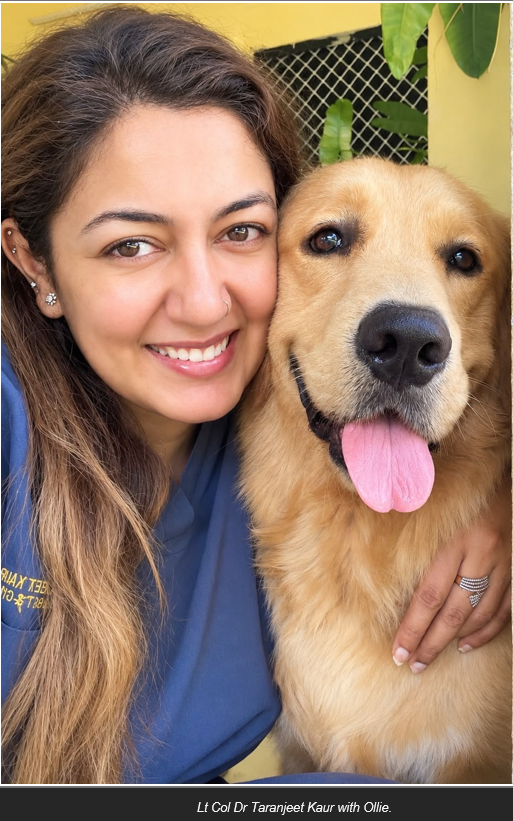
For Lt Col Dr Taranjeet Kaur, that feeling seems to have found its expression in Ollie, her dog. What began as bringing a pet into her life gradually developed into a relationship built on companionship, trust and responsibility.
Dr Taranjeet Kaur leads a life shaped by professional commitments and responsibilities. Yet, like many people, being surrounded by others does not always mean escaping the quietness that can come with returning home. Ollie gradually became part of that quiet space.
When a dog first becomes part of a household, there are practical responsibilities—food, healthcare, vaccinations, hygiene, exercise and time. But somewhere along the way, those responsibilities can turn into something more personal. Ollie became part of Taranjeet’s everyday routine, and his presence slowly became something she could not imagine her home without.
That is where the relationship appears to have moved beyond that of a pet and an owner.
Ollie does not need to know about Taranjeet’s professional achievements, designation or responsibilities. To him, she is simply his person. He does not need explanations when she has had a difficult day. He does not need to understand why she is happy or worried. His presence itself becomes a form of companionship.
Over time, Ollie’s wellbeing has also become important to her. His health, routine, safety and future are considerations that have found a place in her life. That is often when the meaning of having a pet changes. It is no longer simply about caring for an animal; it becomes about feeling responsible for another living being.
There is also a larger lesson in their relationship.
Modern life can leave people connected to hundreds of others through phones and social media while still feeling lonely. Animals offer a different kind of companionship. They do not care about someone’s profession, status, salary or achievements. Their relationship is much simpler: presence, trust and familiarity.
For Taranjeet, Ollie may therefore represent more than companionship. He brings routine, responsibility and the feeling that somewhere, there is a living being for whom her presence matters deeply.
But that bond comes with an important responsibility. Bringing an animal home cannot be only an emotional decision. Food, healthcare, exercise, safety and care during illness or old age remain lifelong commitments. Love for an animal is meaningful only when it is accompanied by responsibility.
Perhaps that is what makes the relationship between Taranjeet Kaur and Ollie worth noticing.
It is not a story built around an award, a photograph or social media attention. It is simply about two lives becoming part of each other’s daily rhythm. Taranjeet thinks about Ollie’s wellbeing and future; Ollie, in his own uncomplicated way, waits for her return.
As Dr. A. Kumar writes, animals accept us unconditionally, and in return, they deserve unconditional care.
Sometimes family is created by blood. Sometimes by responsibility. And sometimes by a bond that needs no words.
For Taranjeet Kaur, Ollie appears to be that kind of family—a dog who entered her life as a pet and, over time, became something much more.