VARANASI: In a city where astrology, Ayurveda and traditional systems of knowledge have been part of everyday life for generations, Acharya Hemanshu Sahu has built his professional journey around a subject that continues to attract both curiosity and debate — the relationship between astrology, gemstones and traditional Indian knowledge.
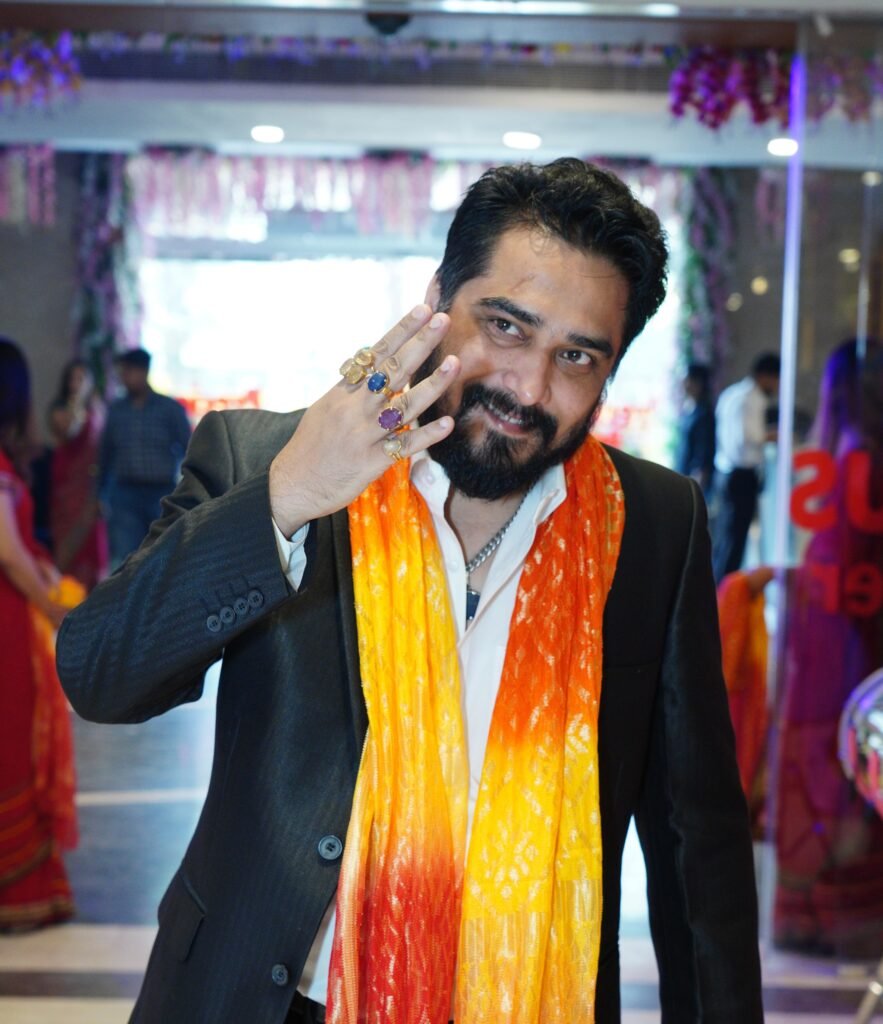
A Varanasi-based International Vedic Astrologer, gemologist, numerologist and psychic, Hemanshu has been working in the field since 2015. His work covers Vedic Astrology, the KP System, Palmistry, spiritual healing and gemstone-related practices. He has also been associated with online astrology platforms and spiritual communities in Varanasi.
For him, gemstones are not simply ornamental stones. Within the traditional astrological system, different stones have long been associated with particular planets and are recommended according to an individual’s horoscope and planetary circumstances.
That approach, however, sits alongside a very different discipline — modern gemology.
Gemology is concerned with the physical identity and characteristics of a gemstone, including its composition, authenticity, treatments and quality. Astrology, on the other hand, interprets a gemstone through a traditional planetary and birth-chart framework. Keeping these two perspectives separate is important, particularly at a time when interest in gemstones is growing well beyond their traditional use.
Hemanshu’s work lies in exploring that traditional framework while also drawing attention to the importance of understanding the gemstone itself. His professional profile describes him as a certified gemologist with knowledge of gemstones and Rudraksha, alongside his work in Vedic Astrology, the KP System and other traditional practices.
From Astrology to Gemstone Guidance
The journey began with astrology. After completing his Acharya degree in Varanasi, Hemanshu moved into professional consultations and gradually developed a wider practice around traditional Indian systems.
His consultations include matters related to marriage and relationships, career and business, wealth and property, as well as spiritual growth. His professional work also includes traditional practices such as Graha Shanti Jaap, Navgrah Shanti Pooja and Shani-related rituals.
His approach is to combine traditional knowledge with a more contemporary style of interpretation, while tailoring consultations to individual circumstances.
The distinction is significant because astrology is often discussed in absolute terms. A more careful approach is to recognise that astrological interpretations belong to a traditional belief system, while questions about a gemstone’s physical properties and authenticity can be examined through established gemological methods.
That difference does not necessarily prevent a conversation between the two. Instead, it creates room for questions about how traditional knowledge evolved, how gemstones came to acquire particular planetary associations and how much of their physical character can be understood through modern gemological study.
A Three-Day Gathering at BHU
Hemanshu’s work is set to receive another public platform in September with the Kashi Jyotish Mahotsav – AyurJyotish 2026, scheduled for September 1, 2 and 3 in Varanasi.
According to the event programme, the gathering is an international seminar on the relationship between Ayurveda and astrology. It is being presented as a joint initiative involving the Department of Dravyaguna, Faculty of Ayurveda, IMS-BHU and the Kashi Jyotish Sansthan.
The event is scheduled to take place at the K. N. Duppa Auditorium, IMS-BHU, Varanasi.
For Hemanshu, the event carries particular significance. The programme material announces the Kashi Jyotish Martand Award for him and describes him as a Jyotishacharya and Ratna Visheshagya, along with his work in numerology and tarot.
The recognition comes at a time when traditional Indian knowledge systems are increasingly being discussed outside purely religious or personal settings. Questions around their history, methods and contemporary relevance are finding space in wider public conversations.
Keeping Tradition Relevant
Hemanshu’s professional work also reflects the changing way people now access astrology. He provides consultations both online and offline and works with clients in India and internationally.
His professional presence also includes services related to astrology, numerology, psychic guidance and gemstones.
But the larger question surrounding this field is not simply whether people believe in astrology. It is how traditional knowledge is documented and presented at a time when audiences increasingly expect information to be explained, questioned and placed in context.
Gemstones provide a good example. Their mineral composition, authenticity and treatments can be studied using gemological techniques. Their association with planets and their proposed influence on an individual’s life belong to the traditional astrological framework. Treating the two as identical would blur an important distinction.
For practitioners working in this space, therefore, the challenge is to preserve the cultural and historical value of traditional knowledge without presenting traditional interpretations as established scientific conclusions.
A Journey Rooted in Kashi
Varanasi remains an important part of Hemanshu’s professional identity. The city has long brought together religious practice, traditional learning, Ayurveda, philosophy and different schools of Indian knowledge.
His work sits within that larger environment.
Whether discussing a birth chart, a gemstone or an old astrological practice, the questions around these subjects are often as much about India’s intellectual and cultural history as they are about personal belief.
The upcoming Kashi Jyotish Mahotsav gives Hemanshu another opportunity to participate in that conversation. The September gathering, bringing Ayurveda and astrology together under one programme, also reflects the continuing effort to revisit India’s traditional knowledge systems in a changing world.
For Acharya Hemanshu, the journey from astrology to gemstone expertise has been a gradual one. What comes next may be less about choosing between tradition and modernity and more about asking where the two can meaningfully meet — and where they need to remain distinct.