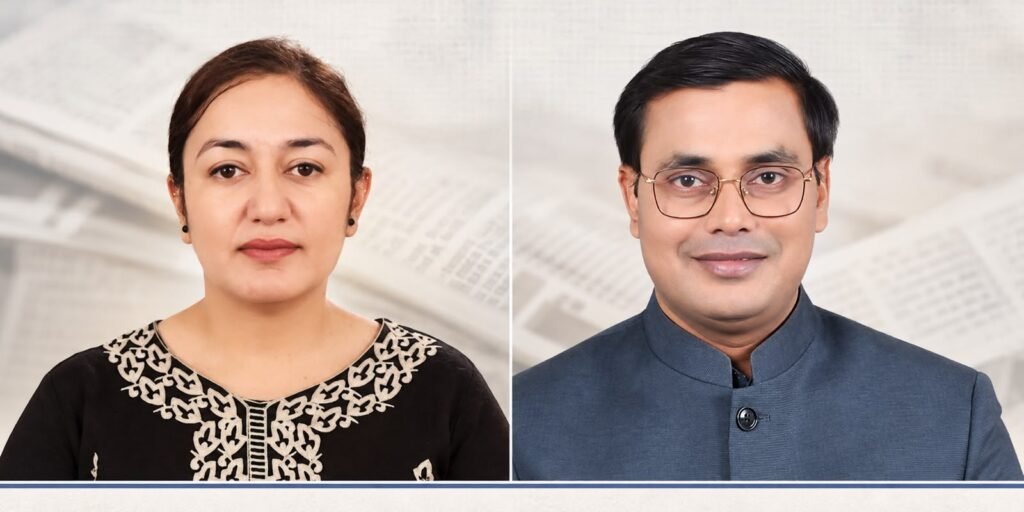
By Mahesh Ved
Former President, Students’ Union, Government College Bandikui
The appointment of Shri Pralhad Joshi as India’s new Union Education Minister, following the resignation of Shri Dharmendra Pradhan, marks an important moment for the country’s education system.
It comes at a time when students across India have been demanding greater transparency, accountability, and fairness in examinations and recruitment. With the Ministry of Education now under new leadership, expectations are naturally high.
But for millions of students, a change in leadership alone is not enough. What they are looking for is a renewed sense of trust—trust that merit will be respected, opportunities will be fair, and the education system will work in their favour rather than against them.
Among the biggest challenges before the new Education Minister is restoring confidence in India’s examination system. Over the past few years, repeated incidents of paper leaks, cancelled examinations, delayed recruitment processes, and administrative lapses have left students frustrated and uncertain about their future.
For many aspirants, every cancelled exam means another year of preparation, financial pressure on families, and emotional exhaustion. The need of the hour is a secure, technology-driven, and transparent examination system where such failures become nearly impossible and accountability is fixed at every level.
Equally important is the need to make education more closely linked with employment. A degree should not simply be a certificate—it should prepare students for meaningful careers. Universities must strengthen partnerships with industries, expand vocational and skill-based education, encourage internships, and promote entrepreneurship so that graduates are equipped not only for government jobs but also for opportunities in the private sector and self-employment.
The National Education Policy (NEP) has laid out an ambitious vision for the future of education in India. However, its true success depends on implementation. While some institutions have begun embracing these reforms, many government schools and colleges—particularly in rural areas—still struggle with inadequate infrastructure, limited digital resources, and a shortage of trained teachers. The responsibility of the new minister will be to ensure that the promises of the policy reach every classroom, not just policy documents.
Government educational institutions also deserve greater attention. The gap between public and private education continues to widen, creating unequal opportunities for students. Improving teacher training, modernising laboratories, expanding digital classrooms, strengthening libraries, and providing proper student counselling services should become national priorities. A student’s future should never be determined by whether they study in a city or a village.
Mental health is another issue that can no longer be ignored. The pressure of competitive examinations, frequent postponements, and uncertainty has affected the emotional well-being of countless students.
Every educational institution should have accessible counselling support, while examination schedules must remain predictable and transparent to reduce unnecessary stress.
As someone who has had the opportunity to represent students, I strongly believe that educational policies become more effective when students themselves are part of the conversation.
Regular dialogue between policymakers, teachers, researchers, educationists, and student representatives can help create reforms that are both practical and responsive. Education cannot be governed solely from government offices; it must also reflect the experiences and aspirations of those who live the system every day.
The recent nationwide student movement has once again demonstrated that students are not merely recipients of education—they are active stakeholders in shaping the nation’s future. Their concerns deserve to be heard with seriousness and respect.
Shri Pralhad Joshi takes charge of the Ministry of Education at a time of significant challenges but also immense opportunity. If his tenure succeeds in restoring transparency, ensuring timely examinations, strengthening public education, and placing employability at the heart of educational reforms, it could become a defining chapter in India’s educational journey.
Today, millions of students are looking beyond announcements and promises. They are hoping for meaningful reforms that restore faith in the system and create genuine opportunities for every learner.
After all, education is far more than a government portfolio—it is the foundation upon which the future of India is built. The nation now looks forward to a new beginning that is fairer, stronger, and truly centred on the aspirations of its students.