By Dr. A. Kumar
Public Health Expert & Environmental Conservationist
The Himalayas are much more than snow-covered mountains. They are the source of our rivers, home to unique biodiversity, and vital to the lives of millions of people across India.
When concerns about the Himalayas are raised, they deserve thoughtful attention—not because of who is speaking, but because of what is at stake.
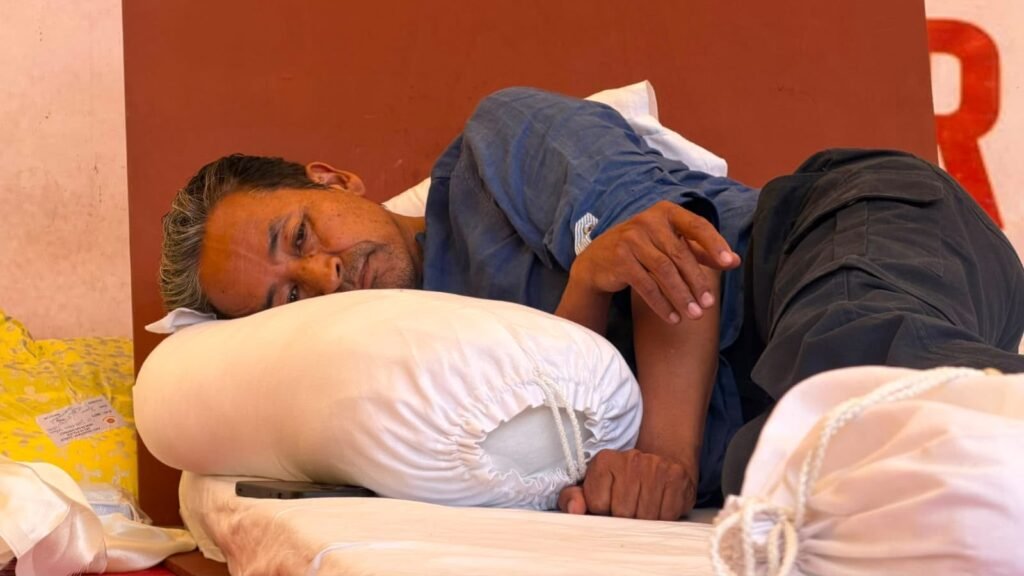
Recent reports about the declining health of education reformer and environmentalist Sonam Wangchuk have brought renewed focus to these issues. Whatever one’s views on the demands being raised, the well-being of any individual engaged in a peaceful democratic movement should be a matter of human concern.
As a public health professional, I know that prolonged fasting can have serious medical consequences, making timely care and dialogue all the more important.
My connection with Sonam Wangchuk goes beyond his public image. I first met him at SECMOL in Ladakh in 2019 and have had the opportunity to interact with him several times since.
What impressed me most was not only his innovative approach to education but also his unwavering commitment to sustainability and local communities. At SECMOL, I saw how practical learning, renewable energy and climate-sensitive design could work together to create meaningful change.
I have also experienced his kindness personally. During a difficult period in my own health, he took the time to call and ask about my well-being. It was a simple gesture, but one that reflected his compassion and humanity.
The challenges facing Ladakh are not limited to one region. Melting glaciers, changing weather patterns and increasing pressure on fragile ecosystems affect the entire Himalayan belt, with consequences that reach far beyond the mountains. As climate change accelerates, protecting the Himalayas is no longer just an environmental issue—it is a public health and national priority.
India has always been strongest when it has chosen dialogue over division. Differences of opinion are natural in a democracy, but listening to peaceful voices and engaging in constructive conversations strengthens our institutions and helps build lasting solutions.
The story of Sonam Wangchuk is ultimately about more than one individual. It reminds us that real progress must balance development with environmental responsibility and compassion. The Himalayas have protected us for centuries. Today, they ask us to protect them with the same commitment, wisdom and care.
Because when we safeguard the Himalayas, we safeguard the future of India itself.