By Special Correspondent
In the remote tribal hills of southern Odisha, where forests embrace scattered villages and mountain streams flow throughout the year, life was once defined by hardship. Women walked long distances every day to fetch water, children often missed school to support their families, and farmers depended entirely on erratic rainfall. Despite the presence of perennial springs and streams, precious water flowed downhill without benefiting the people living nearby. Poverty, food insecurity, seasonal migration, and debt had become part of everyday life.
Today, many of these villages stand as inspiring examples of sustainable, community-led development.
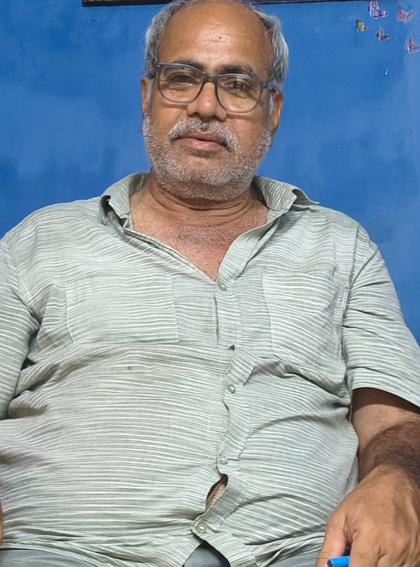
At the heart of this transformation is Rabindra Nath Patra, Founder Secretary of the Institute of Social Action and Research Activities (ISARA), a grassroots organisation based at Baikuntha Nagar, 3rd Line, Berhampur, Odisha. A postgraduate in Political Science from Berhampur University, Patra has devoted 36 years to working with tribal communities across nearly 150 remote and geographically challenging villages in R. Udayagiri and Nuagada blocks of Gajapati district, and Patrapur block of Ganjam district.
Founded in 1992, ISARA began by providing non-formal evening education to tribal children who could not attend school during the day because they worked alongside their families. But while living and working closely with these communities, the organisation realised that education alone could not overcome poverty. The real challenge lay in securing water, livelihoods, and sustainable agriculture.
That understanding led to one simple yet transformative idea: harness the mountain streams that had flowed unused for generations.
Working alongside Village Development Committees and Community-Based Organisations, ISARA introduced gravity-based mountain flow water management systems, allowing naturally flowing water to reach agricultural fields without pumps or electricity. The same water was also used for drinking, household needs, sanitation, and livestock, creating a sustainable system owned and managed by the communities themselves.
The impact has been remarkable.
With the support of its long-standing major donor partner, Mennonite Central Committee (MCC) India, Kolkata, along with valuable support from IFAD and APF, and through the remarkable contribution and active participation of local communities, ISARA has constructed 44 gravity-based mountain flow water irrigation systems, bringing irrigation to nearly 1,650 acres of farmland. The organisation has also provided household drinking water facilities in 48 remote tribal villages, enabling families to access safe water for drinking, household use, sanitation, and livestock while laying the foundation for sustainable agriculture and improved rural livelihoods.
These initiatives have directly benefited nearly 5,500 vulnerable tribal families. More than 2,200 acres of previously barren land have been transformed into productive agricultural landscapes. Farmers who once depended on a single rain-fed crop now harvest two to three crop seasons every year. Traditional food crops, millets, pulses, cereals, oilseeds, and vegetables have been revived through organic farming practices, while stone bunds, retaining walls, and other soil and water conservation measures have strengthened climate resilience across the region.
The transformation extends far beyond agriculture. Seasonal distress migration has declined significantly as farming has become a dependable source of income. Children have returned to school, women have been relieved from the daily burden of walking miles for water, and families now enjoy better nutrition, improved health, and greater financial security. Stronger community institutions have also enabled villages to access government welfare programmes and development schemes that had once remained out of reach.
For Rabindra Nath Patra, development has never been about building infrastructure alone. It is about restoring dignity, empowering communities, and helping people realise the value of the natural resources surrounding them. Every irrigation channel, every revived farm, and every empowered village reflects the power of collective action.
Today, ISARA’s work stands as a successful model of sustainable water management, tribal development, organic agriculture, climate resilience, natural resource conservation, and community-led rural transformation. After more than three decades of grassroots service, Rabindra Nath Patra now hopes to document these inspiring journeys through a storytelling book—one that celebrates the resilience of Odisha’s tribal communities and demonstrates how a simple mountain stream, guided by community participation and visionary leadership, can change generations.
This version is concise, publication-ready, and suitable for a national newspaper or magazine feature while naturally incorporating the work of MCC India, IFAD, APF, and the contribution of the tribal communities themselves.