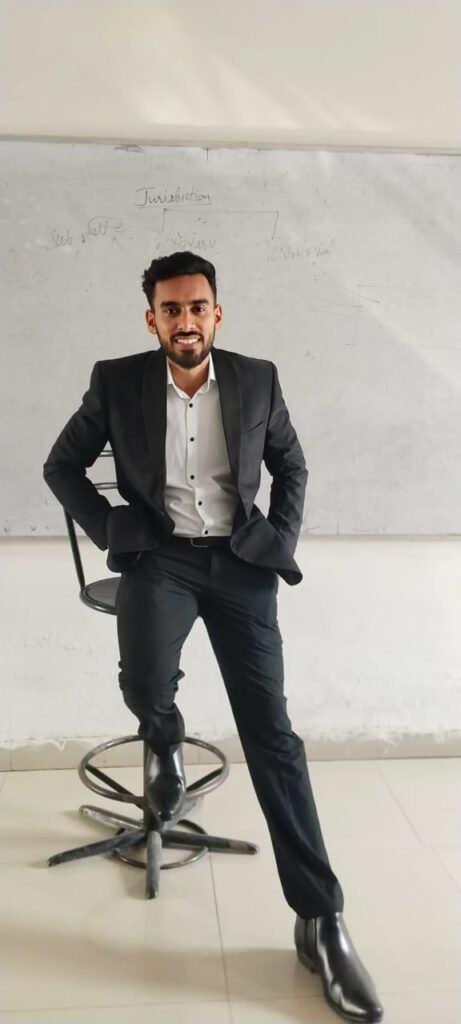
At 19, Ujjwal Ojha is gradually finding his place in the world of photography. His journey is not built around a dramatic beginning or expensive equipment. It started simply—with curiosity, a basic Nokia keypad phone and an interest in capturing the world around him.
His early journey was not backed by a strong support system. Much of what he wanted to learn and pursue, he had to figure out on his own, relying on his curiosity, persistence and whatever resources were available to him.
Ujjwal started taking photographs with his Nokia keypad phone and, over time, became increasingly interested in the way everyday moments could be captured through a frame. He later saved money from his pocket allowance to buy a smartphone and eventually began experimenting with a camera borrowed from his brother.
As his interest grew, photography became less about simply taking pictures and more about observing. Light, composition, atmosphere, people and small details began to matter. Instead of always looking for extraordinary subjects, Ujjwal started finding stories in ordinary places.
That approach can be seen in “The Spot,” one of his recognised works. The photograph focuses on a railway bridge and tracks, with a red railway signal standing prominently within the frame. The lines of the tracks create depth and naturally draw the viewer into the photograph, while the overall composition gives an otherwise familiar railway scene a distinctive character.
“The Spot” has received recognition from the Royal Photographic Society and has also been appreciated by several photographers and photography enthusiasts. For someone who is only 19 and still at the beginning of his photographic journey, the recognition has provided an important encouragement to continue developing his work.
Another creation that has attracted considerable attention is “Chitralekha,” regarded as one of Ujjwal’s most loved works.
The photograph captures a rain-soaked railway platform, with two people walking under an umbrella while the tracks disappear into the mist. Red railway signals glow through the muted surroundings, creating a striking contrast. The rain, fog and railway lines give the image a quiet and atmospheric quality.
What makes “Chitralekha” particularly interesting is its simplicity. There is no dramatic event taking place in the frame. It is an ordinary moment at a railway station, yet Ujjwal’s way of composing it gives the scene an emotional and almost cinematic quality. The photograph has received strong appreciation from people who have seen his work and has become one of the creations most closely associated with his growing identity as a photographer.
“Chitralekha” is now also heading towards an important milestone. The photograph is scheduled to go for auction in Delhi at the end of December. While its final value will only be known after the auction, its appearance at an auction is itself a significant step for a young photographer who is still building his career.
Ujjwal’s work has also been noticed and appreciated by established names in photography, including Surojit Majumdar, Kaustav Saikia and Avani Rai. Recognition from photographers with considerable experience in the field has added another layer to Ujjwal’s early journey and encouraged him to keep experimenting with his work.
But at 19, Ujjwal’s story is still very much in progress. It would be too early to describe him as an established photographer. He has plenty of room to experiment, make mistakes, learn and develop a photographic language that is truly his own.
For now, his journey is perhaps best understood through the simplicity of where it began. A basic Nokia phone gave him his first opportunity to start taking photographs. A smartphone and his brother’s camera allowed him to explore further. And today, works such as “The Spot” and “Chitralekha” are giving viewers a glimpse into the way he sees ordinary spaces and moments.
There is no claim of having already arrived. Instead, there is a young photographer who has had to find much of his own path, learning to observe more carefully and translate those observations into images.
At just 19, Ujjwal Ojha is still discovering what his camera can say. And judging by the attention his early work has received, the photographs that have brought him recognition so far may only be the beginning of his journey.