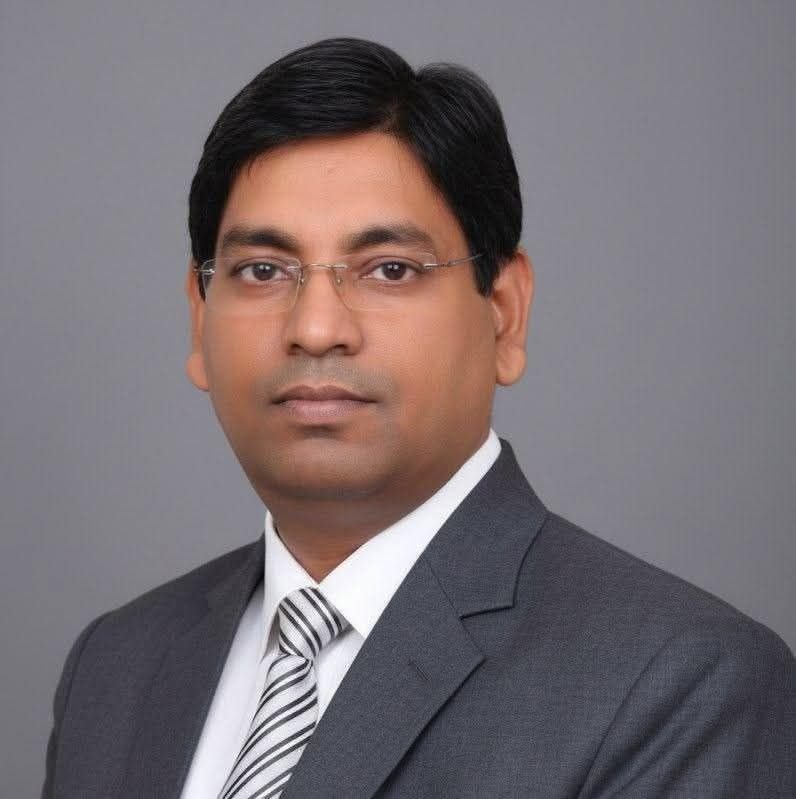
In a nation where scientific recognition is often associated with prestigious institutions and metropolitan research centers, the emergence of Dr. V. B. Dhuriya from the district of Lakhimpur Kheri stands as a compelling reminder that innovation knows no geographical boundaries. His recent research work and growing international recognition have sparked conversations about the role of Indian scientists in shaping new directions in alternative and integrative medical research.
What makes Dr. Dhuriya’s journey noteworthy is not merely the publication of his work, but the larger narrative it represents. At a time when India is increasingly positioning itself as a global knowledge powerhouse, his efforts reflect the aspirations of a new generation of researchers determined to contribute original ideas rather than simply follow established international models.
Dr. Dhuriya’s proposed methodology, often referred to as the “Dhuriya Method,” seeks to modernize traditional spagyric and homeopathic pharmaceutical processes through structured extraction, standardization, and recombination techniques. The research presents an ambitious framework that attempts to bridge historical healing traditions with contemporary scientific thinking. While the study itself acknowledges the need for extensive experimental and clinical validation before broader scientific acceptance can be achieved, it has nevertheless succeeded in drawing attention to India’s capacity for independent research and innovation.
The significance of this development extends beyond one individual or one scientific discipline. It highlights a larger transformation taking place across India’s research ecosystem. Increasingly, scholars from smaller towns and non-traditional academic backgrounds are contributing ideas that challenge conventional assumptions and invite fresh scientific inquiry. Such developments strengthen the belief that intellectual excellence is not confined to elite laboratories alone.
At the same time, the scientific community must maintain its commitment to rigorous evidence-based evaluation. Every new theory, methodology, or medical system must ultimately be tested through transparent experimentation, peer review, and reproducible results. Scientific progress is sustained not by claims alone, but by the ability of those claims to withstand scrutiny and validation.
Viewed through this lens, Dr. Dhuriya’s work represents both an achievement and an opportunity. It is an achievement because it has brought attention to Indian-led innovation on an international platform. It is an opportunity because it encourages further research, debate, and collaboration that could potentially expand the boundaries of contemporary medical science.
Ultimately, the story of Dr. V. B. Dhuriya is about more than personal success. It reflects the rise of an India that is increasingly confident in its intellectual capabilities, eager to contribute to global scientific discourse, and determined to transform local ideas into internationally recognized innovations. Whether future studies validate every aspect of his work or not, his journey serves as an inspiring example of how vision, persistence, and research can elevate a voice from rural India to the global stage.